Most guests only notice event security when something goes wrong.
They do not see the planning behind controlled entrances, protected service areas, clear emergency routes, coordinated staff communication, or the decision to place an officer in one location instead of another.
That preparation is what allows security to feel organized rather than intrusive.
Whether the event is a private celebration in Hawaiʻi, a corporate function in Las Vegas, a concert, a convention, or a community gathering, security planning should begin well before guests arrive.
Start With the Event, Not a Standard Officer Count
Two events with the same number of guests may require completely different security coverage.
A seated corporate dinner has different needs from a standing concert. A private wedding differs from a public festival. A family event without alcohol will operate differently from a late-night function with multiple bars.
Security staffing should consider:
- Type of event
- Guest count
- Venue layout
- Public or private admission
- Alcohol service
- Event hours
- Number of entrances
- Parking arrangements
- Performers or high-profile guests
- Age range of attendees
- Cash or merchandise sales
- Previous problems at similar events
- Venue requirements
- Emergency access
The guest count matters, but it is only one part of the plan.
Walk the Venue Before the Event
A site review helps identify concerns that may not be obvious on a floor plan.
Security leadership should understand where guests will arrive, how they will enter, where lines may form, which doors lead to restricted areas, and how staff will communicate across the venue.
The review should also consider:
- Primary entrances and exits
- Emergency egress
- VIP or performer access
- Vendor and employee entrances
- Parking and rideshare areas
- Loading zones
- Restrooms
- Bars and alcohol-service areas
- Stages and backstage areas
- Ticketing or registration points
- Areas where crowds may gather
- Locations with limited visibility
A plan that makes sense on paper can fail if it does not reflect how people will actually move.
Entry Procedures Shape the Entire Event
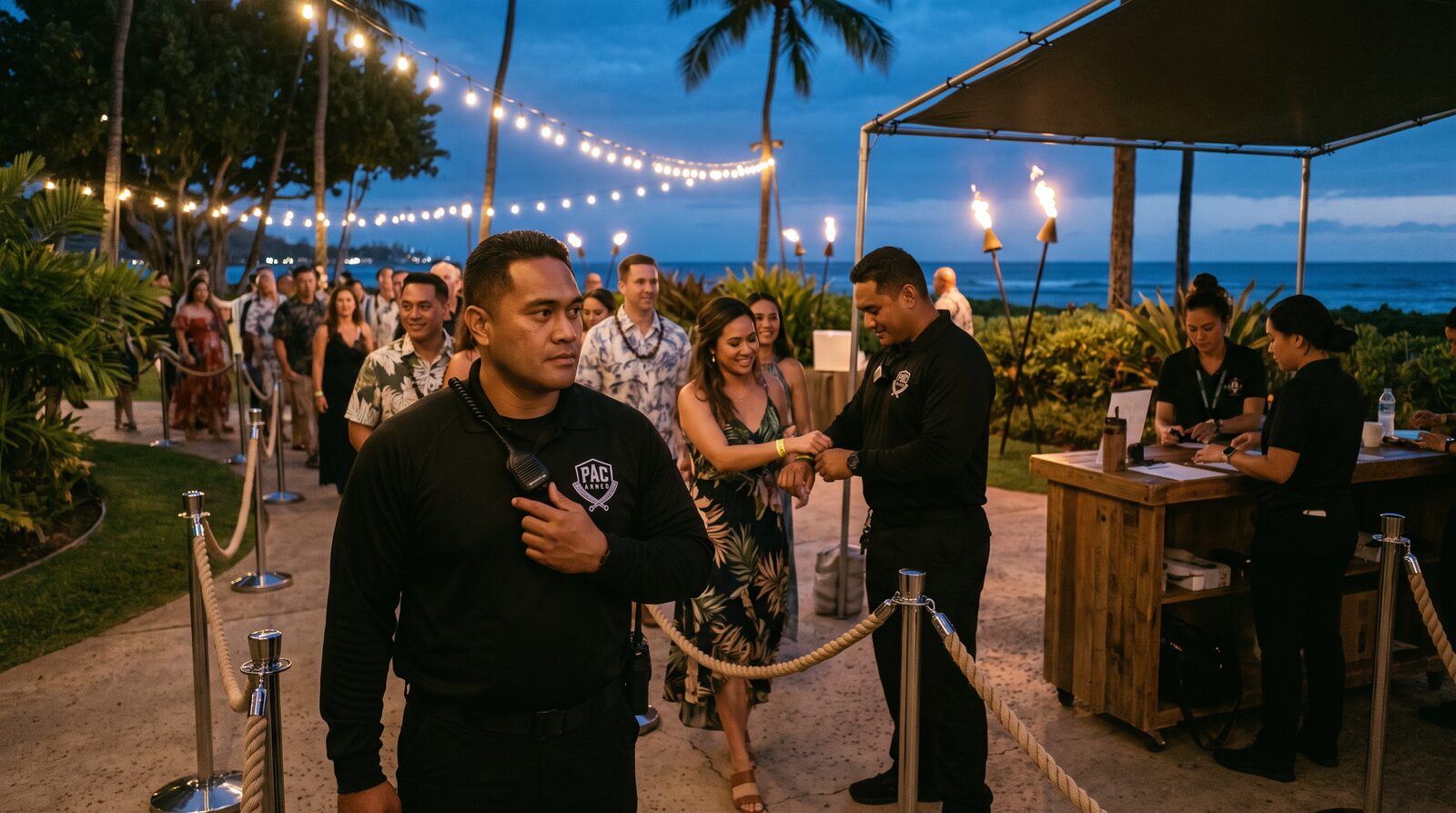
The entrance is where security, guest service, and event operations meet.
If expectations are unclear, lines grow, guests become frustrated, and officers are forced to make decisions without enough direction. Event organizers should establish entry rules before the event and communicate them to staff.
Depending on the event, procedures may address:
- Tickets or invitations
- Guest lists
- Identification
- Bag policies
- Prohibited items
- Reentry
- Vendor credentials
- Employee access
- Media access
- VIP arrival
- Late admission
Security officers should know who has authority to approve exceptions. Making inconsistent decisions at the entrance can quickly create conflict.
Security Should Match the Atmosphere
A luxury event, community gathering, concert, and corporate conference should not all feel the same.
Uniform selection, officer placement, and communication style can be adjusted to the environment. Some events benefit from highly visible officers. Others require security personnel to remain present but discreet.
Professional officers should be able to enforce the event's rules without treating every guest as a problem.
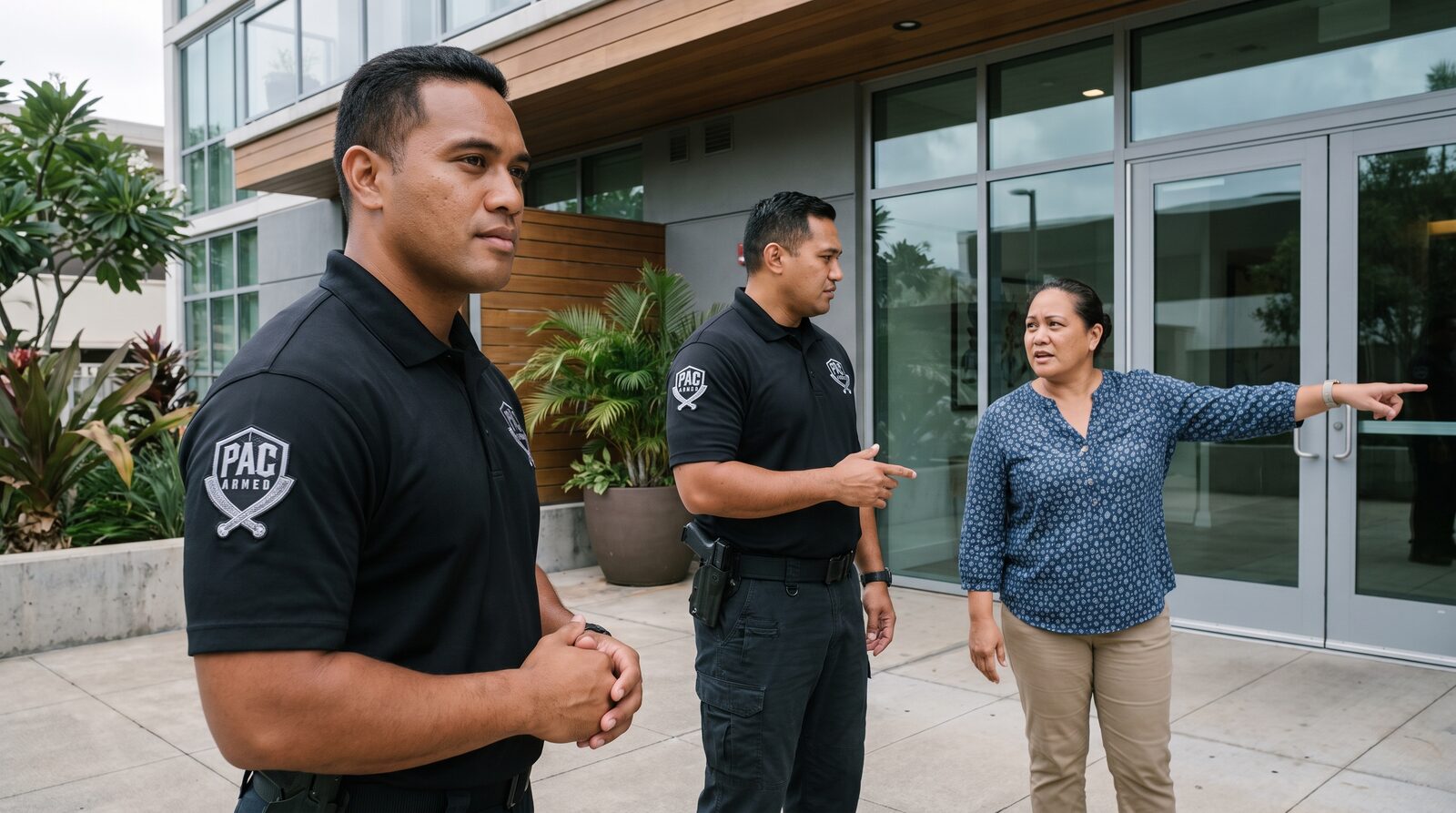
This is especially important in hospitality-focused environments. Guests may need assistance, directions, or clarification. A respectful interaction can preserve the experience while still maintaining control.
Hawaiʻi Events Require Local Awareness
Events in Hawaiʻi often bring together local families, visitors, vendors, performers, and property staff. Outdoor venues, beach-adjacent locations, resort settings, and open-air spaces may create additional movement around the event.
Security officers should understand the importance of respectful communication and community awareness.
A firm tone may sometimes be necessary, but unnecessary confrontation rarely improves an event. Officers should know how to explain expectations clearly, listen when appropriate, and involve event leadership when a decision falls outside their responsibility.
Las Vegas Events Can Change Quickly
Las Vegas regularly hosts conferences, nightlife events, private functions, entertainment, corporate gatherings, and large public activities.
Guests may arrive from several hotels or transportation points. Alcohol service, crowded schedules, high-profile attendees, and multiple events occurring nearby can affect the security environment.
The security plan should account for how the event fits into the surrounding activity, not just what is happening inside the venue.
Clear transportation, entrance, and closing procedures can prevent confusion at the busiest moments.
Communication Must Be Simple
During an event, staff should not be trying to determine who is responsible for what.
The organizer, venue team, and security provider should establish:
- Primary security contact
- Event-management contact
- Radio or phone procedures
- Emergency notification process
- Medical-response responsibilities
- Evacuation authority
- Procedures for removing a guest
- Lost-child or vulnerable-person procedures
- Incident-reporting expectations
- Closing and property-clearance responsibilities
The plan should be easy to follow under pressure.
The End of the Event Still Requires Coverage
Security responsibilities do not end when the program finishes.
Guests may gather outside, wait for transportation, return to vehicles, or continue socializing. Staff may be handling money, merchandise, equipment, or alcohol after the crowd begins leaving.
A closing plan should address:
- Controlled guest departure
- Parking and pickup areas
- Vendor access
- Equipment removal
- Cash or merchandise movement
- Restricted areas
- Final property checks
- Staff departure
This final stage is often quieter but still requires attention.
Professional Event Security Starts With Preparation
PAC Armed Security provides event security services for private functions, corporate events, concerts, venues, and large gatherings throughout Hawaiʻi and Nevada.
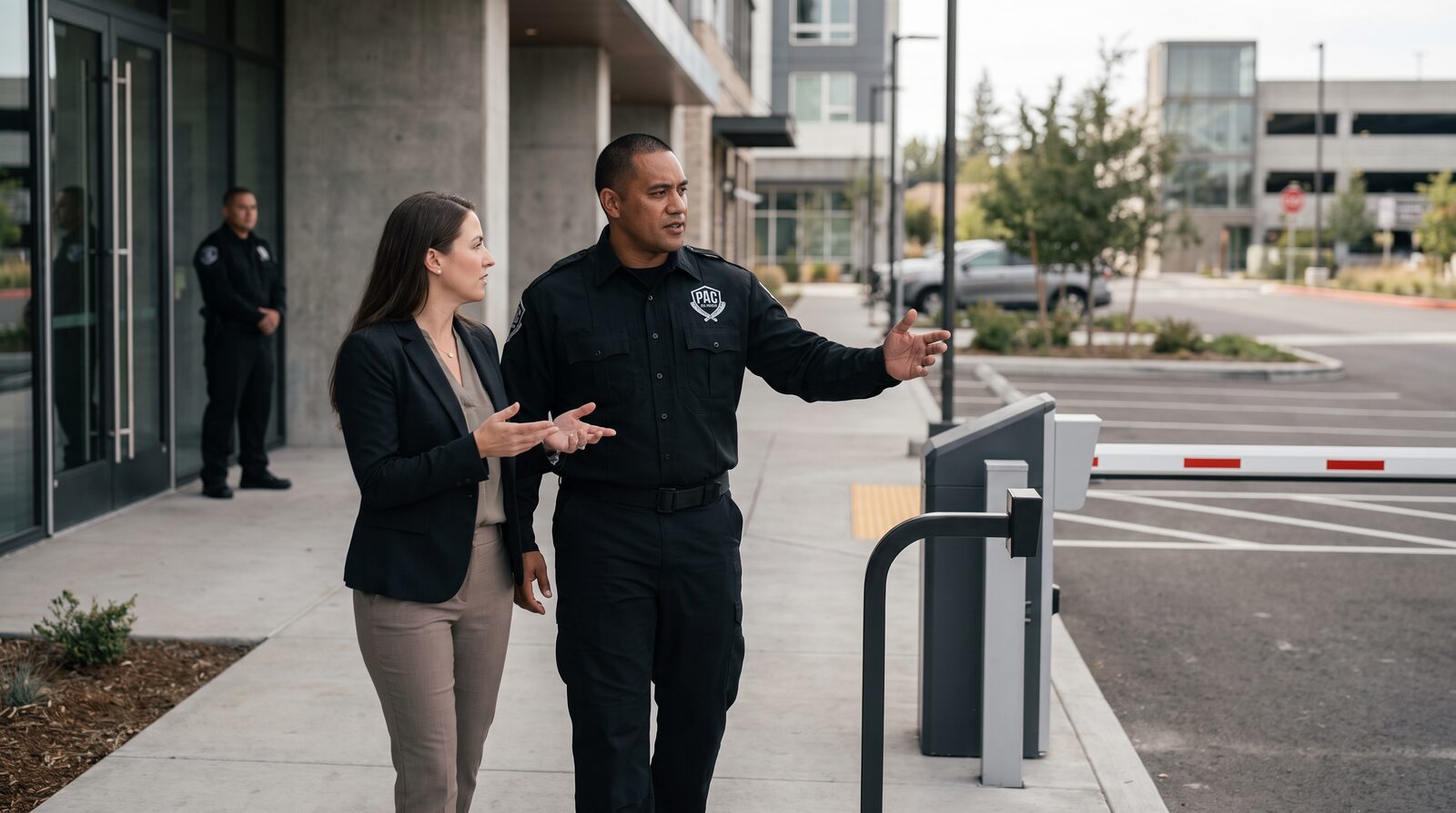
Coverage can include entry support, visible officer presence, restricted-area monitoring, crowd observation, parking-area coverage, incident response, and coordination with event leadership.
The objective is not to dominate the event. It is to help the event run as intended.