Event Security
Event Security Planning for Hawaiʻi and Las Vegas
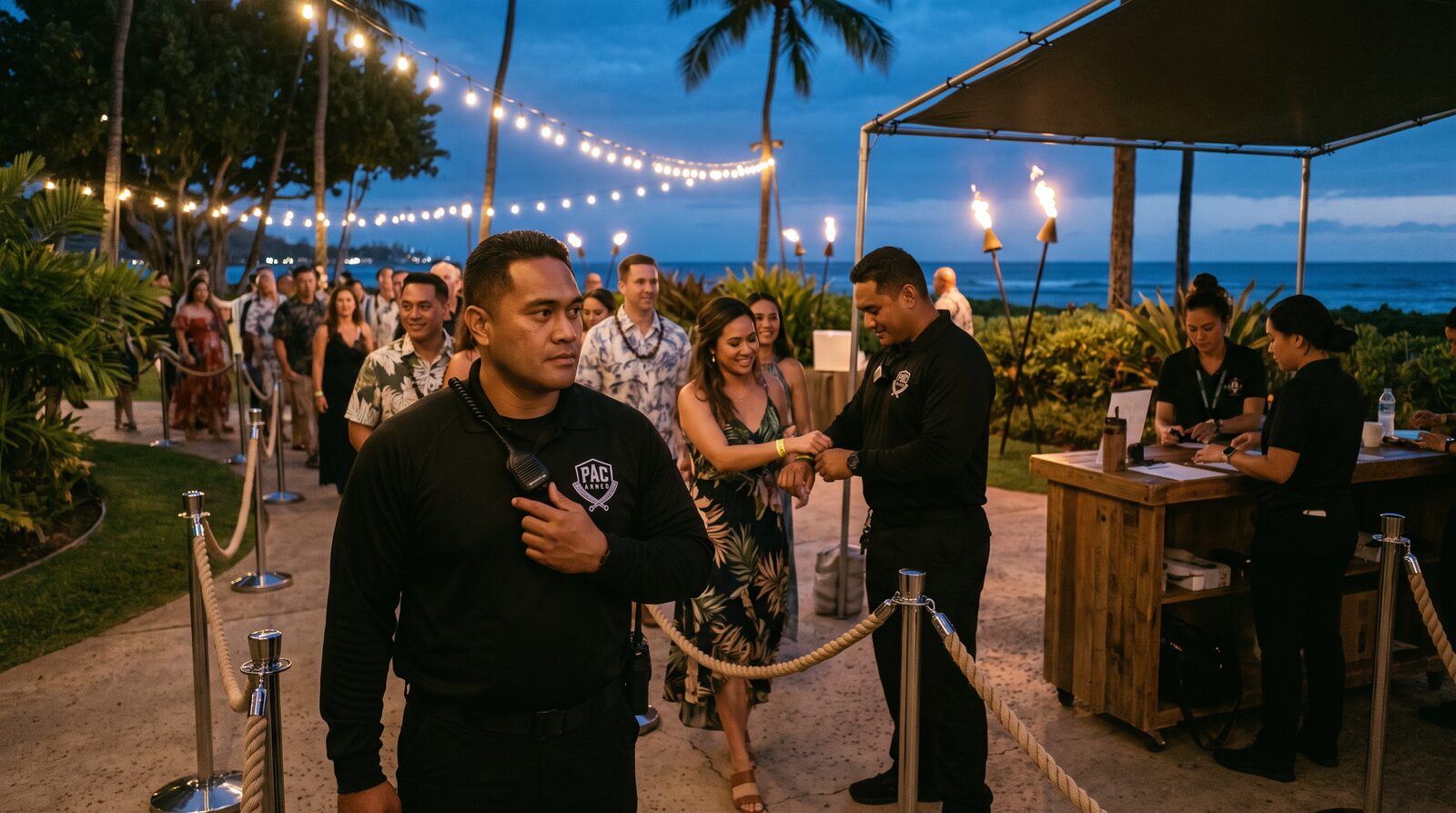
Good event security begins before the first guest arrives. Staffing, entrances, communication, and emergency responsibilities should all be settled before the doors open.
Read More
Hotel and resort security should protect the property without changing the atmosphere guests came to enjoy. That requires awareness, communication, and a hospitality-first approach.
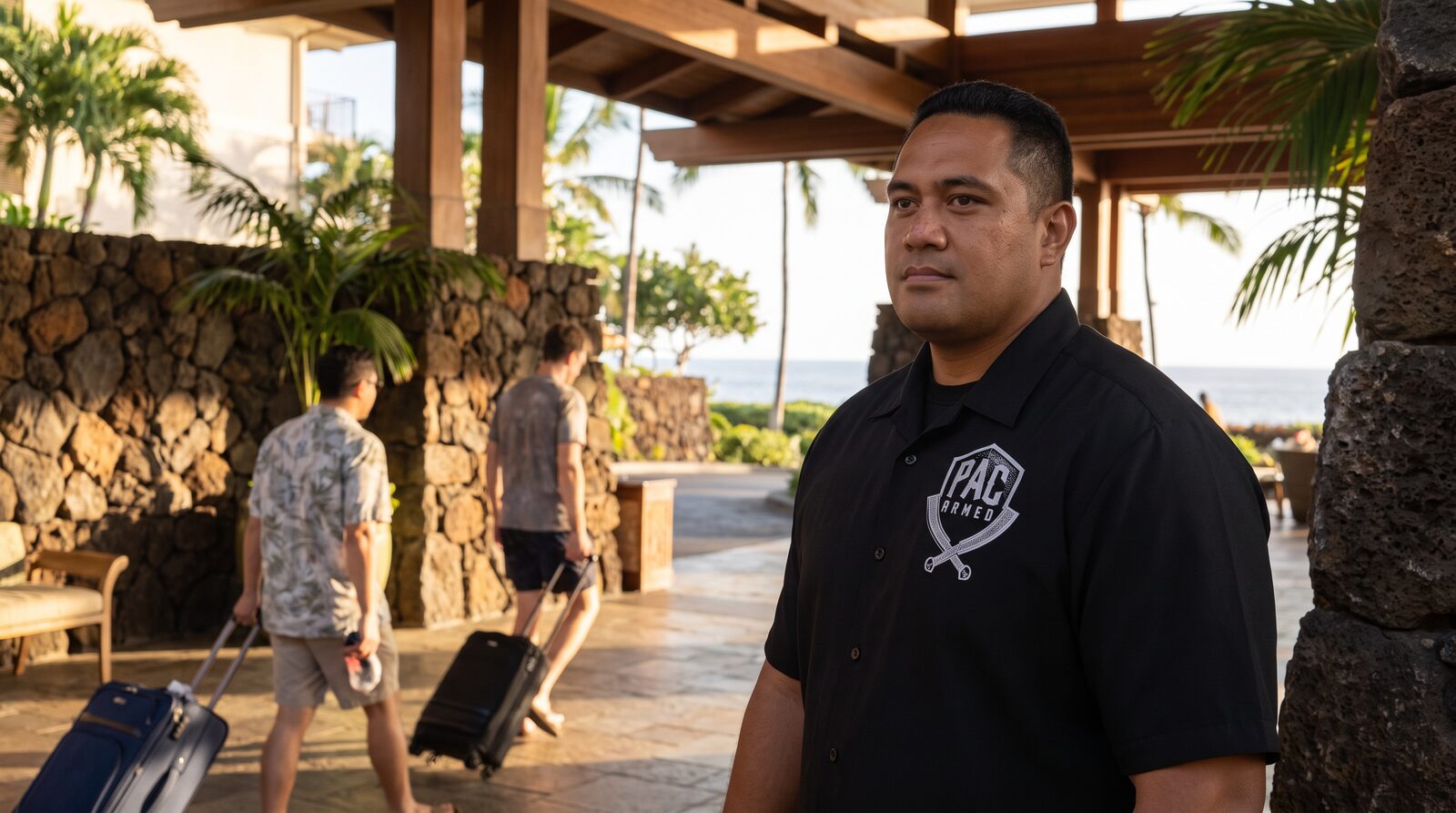
Guests do not arrive at a hotel or resort expecting to think about security.
They expect a smooth check-in, a welcoming property, clean facilities, responsive staff, and the ability to relax. Security is working best when it supports that experience without becoming the center of it.
That does not mean the security role is small. Hotels and resorts bring together guest rooms, public areas, employees, vendors, parking, events, deliveries, restaurants, pools, and service entrances, often within the same property.
Protecting that environment requires more than placing an officer in the lobby.
A hotel security officer must be observant and professional, but also approachable.
Guests may ask for directions, report a concern, need help locating a family member, or simply want reassurance. At the same time, the officer may need to address unauthorized access, disruptive behavior, parking issues, employee concerns, or a situation that requires immediate escalation.
The ability to shift between those responsibilities without losing composure is essential.
An overly aggressive presence can make guests uncomfortable. A passive presence may fail to address developing problems. The right officer understands how to be visible, calm, respectful, and ready.
A hotel is not one security environment. It is several environments connected together.
The front entrance may require guest awareness and traffic management. Parking areas may need vehicle patrols and observation. Pool areas involve access rules and after-hours use. Service corridors and loading areas bring employees, contractors, and deliveries onto the property. Ballrooms and event spaces may suddenly increase the number of visitors on-site.
A hotel security plan should account for areas such as:
The officer's duties should be specific enough to address these areas without pulling attention away from higher priorities.
Hotels regularly handle situations involving personal information, room locations, visitors, and guest requests. Security officers should understand that curiosity is not a reason to access or share private information.
Professional discretion is especially important when assisting executives, public figures, groups, wedding parties, or guests dealing with a sensitive personal matter.
An officer should know when to involve hotel management, when to preserve distance, and when immediate action is necessary. Security and privacy should support one another.
Hawaiʻi's hospitality environment has its own rhythm.
Properties may include open-air spaces, beach access, outdoor dining, tour activity, valet operations, large family groups, and a mix of residents and visitors unfamiliar with the area. Officers may interact with guests from many backgrounds while also working alongside local employees and vendors.
Respectful communication matters.
A security provider working in Hawaiʻi should understand that professionalism includes how people are treated. Authority does not have to come at the expense of aloha, patience, or cultural awareness.
That local understanding becomes particularly valuable during emotionally charged situations. An officer who communicates clearly and respectfully may be able to resolve a concern before it becomes a larger disruption.
Security cannot operate separately from the rest of the property.
The front desk may be the first to notice a guest concern. Housekeeping may encounter an unsecured door or unfamiliar person in a restricted area. Engineering may identify a safety issue. Valet staff may observe suspicious activity near a vehicle. Event staff may recognize that an unauthorized guest has entered a private function.
A good security plan establishes how information moves between departments.
Employees should know:
Clear communication reduces confusion when a situation develops.
A hotel that feels quiet on a weekday afternoon may become a completely different environment during a conference, wedding, concert weekend, corporate gathering, or holiday event.
More people may enter the property without being overnight guests. Parking demand increases. Alcohol service may be involved. Private spaces may sit next to public areas. Employees may be focused on event operations rather than observing who is moving through the building.
Security coverage should adjust when the property's activity changes.
This may involve additional officers, dedicated event entrances and coverage, guest-list coordination, parking patrols, restricted-area monitoring, or a clear plan for closing the event.
Security reports help hotel management understand what happened, how it was handled, and whether further action is needed.
Reports should be clear and factual. They should distinguish between what the officer personally observed and what someone else reported. They should also record relevant times, locations, notifications, and actions without unnecessary speculation.
Over time, this documentation can show recurring concerns involving a particular area, time period, or type of activity.
That information helps management improve the broader security plan.
PAC Armed Security provides hotel and resort security services throughout Hawaiʻi, with coverage designed around the property's layout, guest experience, operating hours, and known concerns.
Officers can support patrols, access awareness, incident response, event coverage, parking areas, employee safety, and other responsibilities established by hotel management.
The goal is not to make a resort feel guarded. It is to help the property feel well managed.
Good event security begins before the first guest arrives. Staffing, entrances, communication, and emergency responsibilities should all be settled before the doors open.
Read More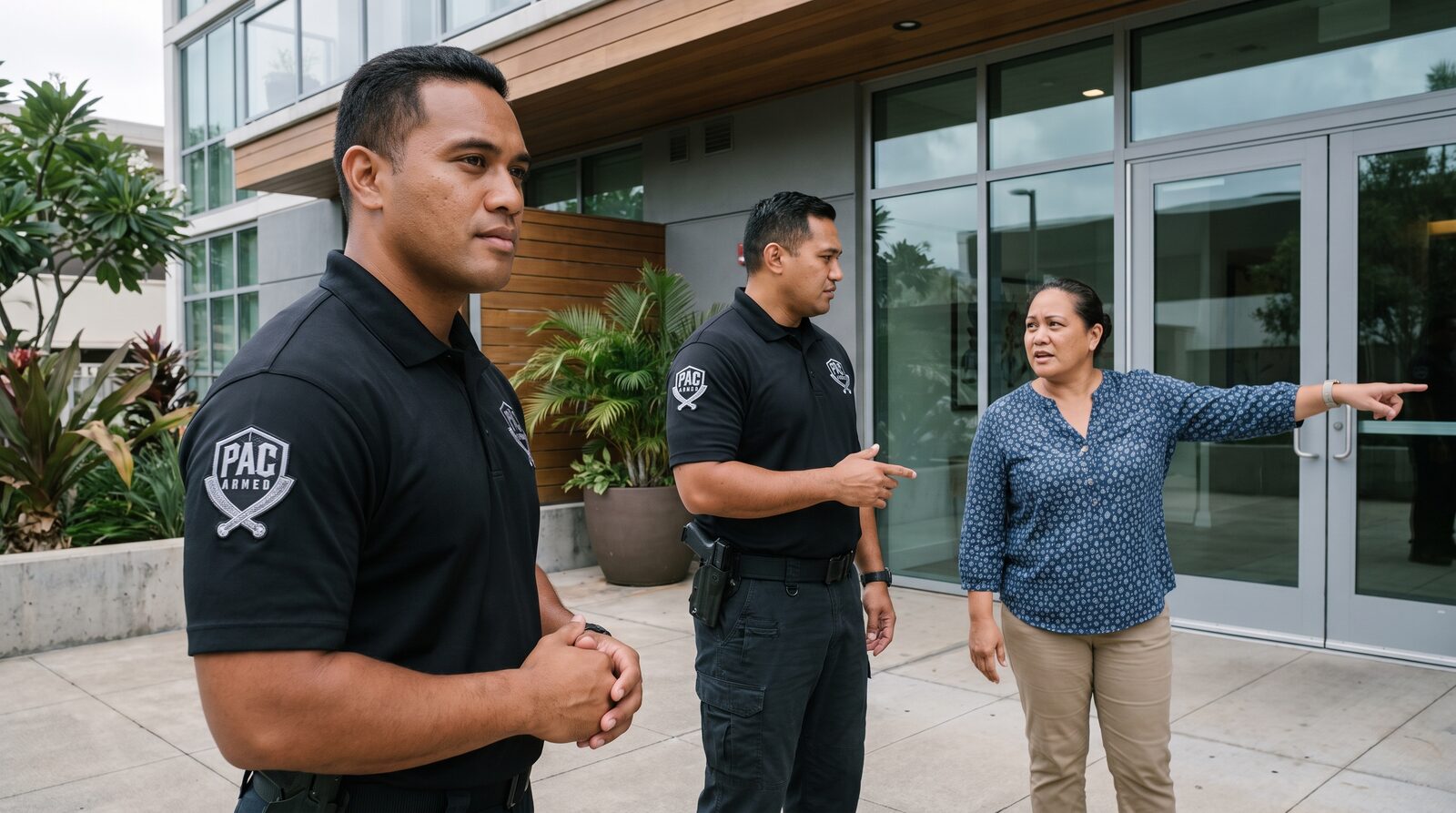
Armed security is not automatically better, and unarmed security is not automatically enough. The right choice depends on the property, its risks, and the role officers are expected to perform.
Read More
Property managers should receive more than an officer in uniform. Reliable security requires clear expectations, suitable personnel, useful reporting, and responsive supervision.
Read MoreSpeak with PAC Armed Security about your hotel, resort, event calendar, guest environment, and coverage needs.